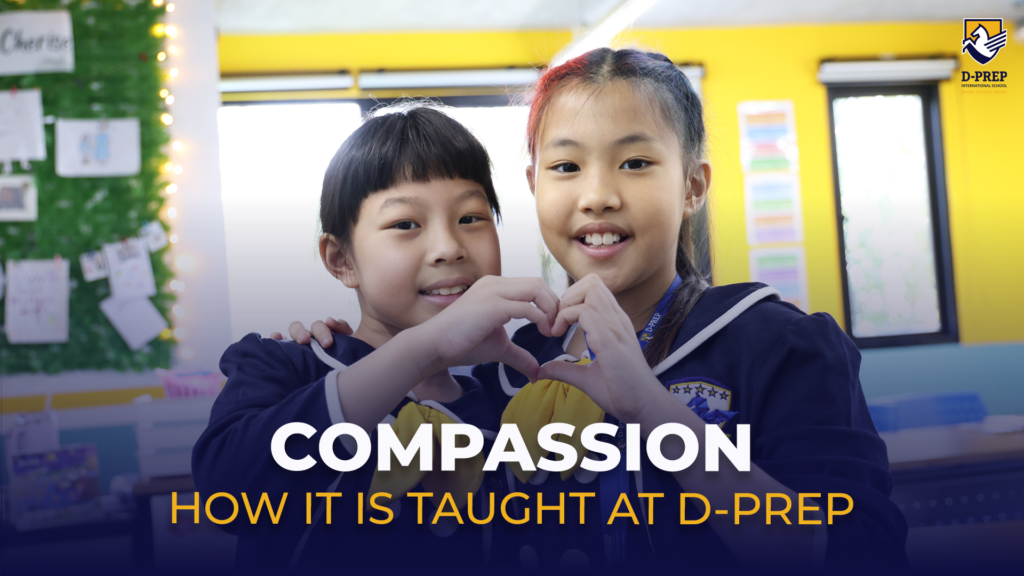
Compassion, from the Latin compati, means “to suffer with.” At its heart, compassion is about standing with others through their hardest moments. While kindness is a thoughtful gesture, compassion reaches deeper, urging us to connect and share in another’s experience. Teaching students this value shapes them into individuals who are sensitive to others’ needs, readily prepared to respond in ways that matter.
Here’s what compassion looks like in action, as shared by our teachers and students:
1. Gentle Words and Actions
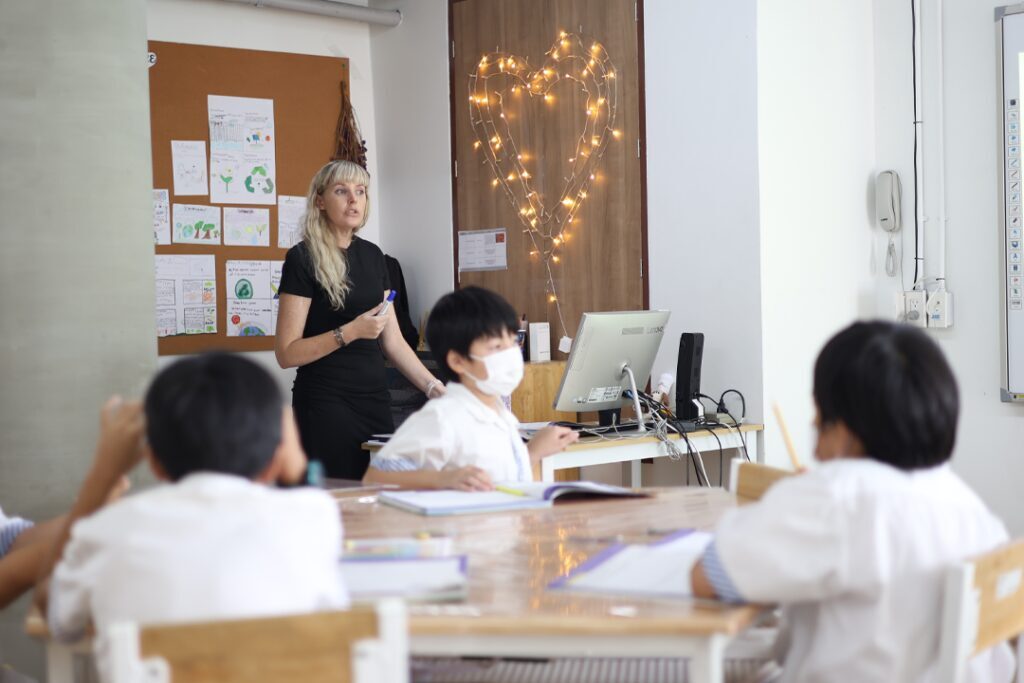
Ms. Geraldine, our Grade 4 teacher, shows her class how compassion is often expressed through small but meaningful actions. “We take time to help students understand what’s happening in the world around them,” she shares. “For example, after a recent bus fire tragedy, students wrote poems of comfort to the affected families. Activities like these help them express kindness through their words and connect with empathy.”

Ms. Cherise, our Grade 5 teacher, emphasizes the importance of small but impactful gestures. “We start by showing students that even a simple smile, a thumbs-up, or a hug can make a difference in someone’s day,” she explains. “We help them see that compassion doesn’t always have to be grand; it can be as small as letting someone know they’re not alone.” She adds that compassion starts within, as Ms. Cherise also teaches students the value of being kind to themselves first.
2. Empathy and Acceptance
Compassion also means embracing differences and understanding others’ experiences. “In our classroom, we talk about understanding and respecting others’ feelings,” shares Ms. Geraldine. “We have reminders set up inside our classroom to be respectful and kind, and we often connect compassion to real-life scenarios to help them better understand this word. I ask them to imagine “if that was done to you” and see that you wouldn’t like it either.
Ms. Cherise also explains how she encourages students to practice compassion by connecting it to their own experiences. “We reflect on how it feels when someone shows us kindness,” she shares. “Even if it’s easy to feel indifferent toward people we don’t know, we teach students that compassion means caring for others, no matter the relationship.” By understanding how compassion feels personally, students learn to appreciate and extend that same kindness and acceptance to others.
3. Supporting and Standing Up for Others
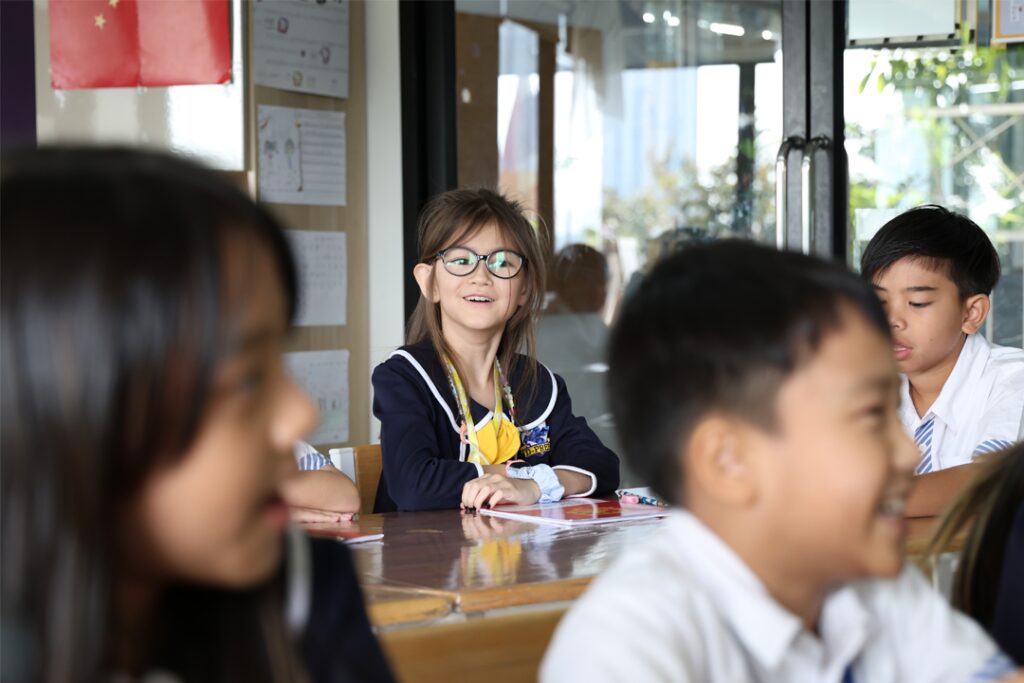
Compassion sometimes means actively supporting others, whether through a kind gesture or by speaking up when needed. Sonya, a Grade 4 student, defines compassion as “helping others who get hurt or fall down, like taking them to the nurse, or even standing up for someone being bullied.” Her perspective shows the proactive nature of compassion rooted in both kindness and courage.
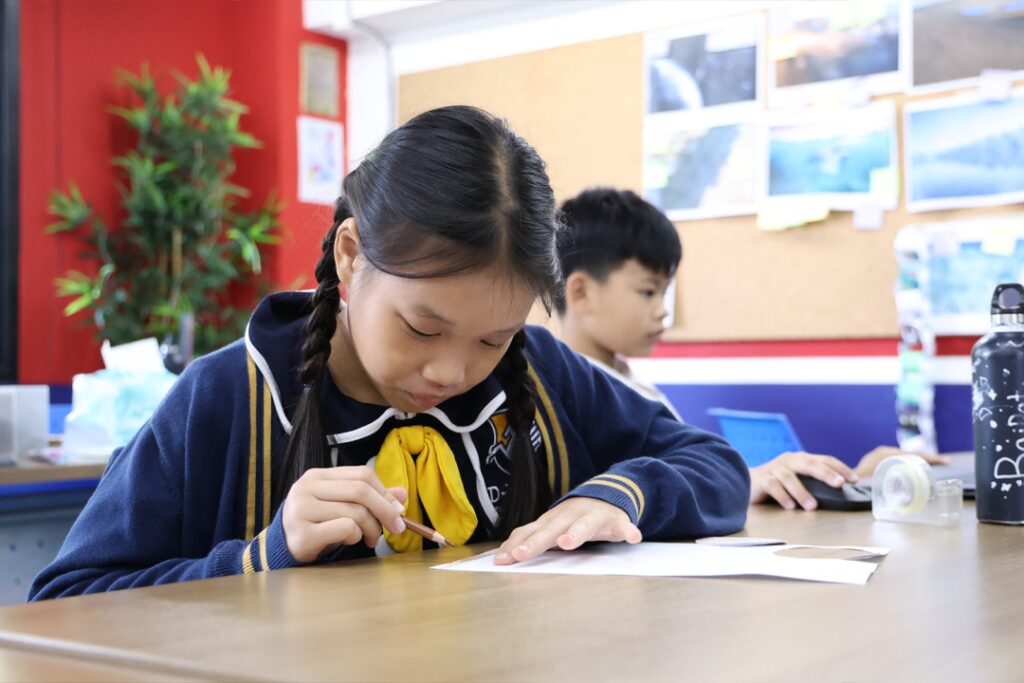
Gda, a Grade 5 student, sees compassion as something shown through everyday actions. “It’s about helping others with what we do, like opening the door for someone, complimenting my friend when she sang well, or picking up someone’s coins if they drop them,” she explains. “You can show kindness through both your words and your actions, and in class, we learned that compassion is about being caring in these small ways.”

It’s through these everyday moments that we begin to truly understand what it means to be compassionate. With each small act of kindness, we create a space where everyone feels they truly matter in a community that puts compassion into action.